

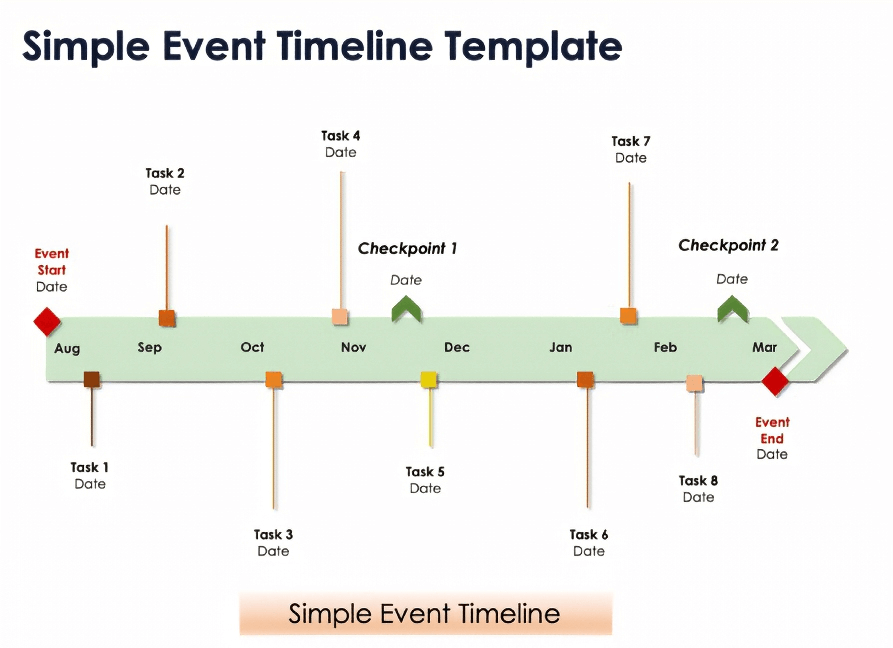
An event without a timeline is just optimism with decorations. A proper timeline is the silent backbone of every successful event.
complete wedding planning guide
Why Timelines Matter More Than Décor
Guests forgive simple décor. They do not forgive:
- Long waits
- Confusion
- Delayed food
- Awkward silences
A timeline prevents all of this.
Step 1: Lock the Non-Negotiables
Start with fixed points:
- Venue access time
- Event start time
- Key moments (ceremony, speeches, performances)
- Venue closing time
These are anchors.
Step 2: Work Backward, Not Forward
Always plan backward from the main event.
Example:
If the ceremony is at 5 PM:
- Guest arrival: 4:30 PM
- Setup complete: 3:30 PM
- Vendor arrival: 1–2 PM
Backward planning reveals problems early.
Step 3: Build Buffers Like a Pro
Rule of thumb:
- Add 10–15 minutes between every major activity
- Add 30 minutes buffer before key moments
Delays are not mistakes—they’re reality.
Step 4: Assign Ownership
Every timeline item should have:
- A responsible person
- A backup contact
If everyone is responsible, no one is.
wedding day timeline planning
Step 5: Share the Timeline
Distribute:
- Full timeline to vendors
- Simplified version to family or staff
Clear communication beats micromanagement.
budget planning discipline
Final Thought
A good timeline is invisible when it works—and painfully obvious when it doesn’t. Plan it like choreography, not a checklist.


